Shame Can’t Survive Being Spoken: Why High-Achieving Women Need Community, Not Just a Seat at the Table
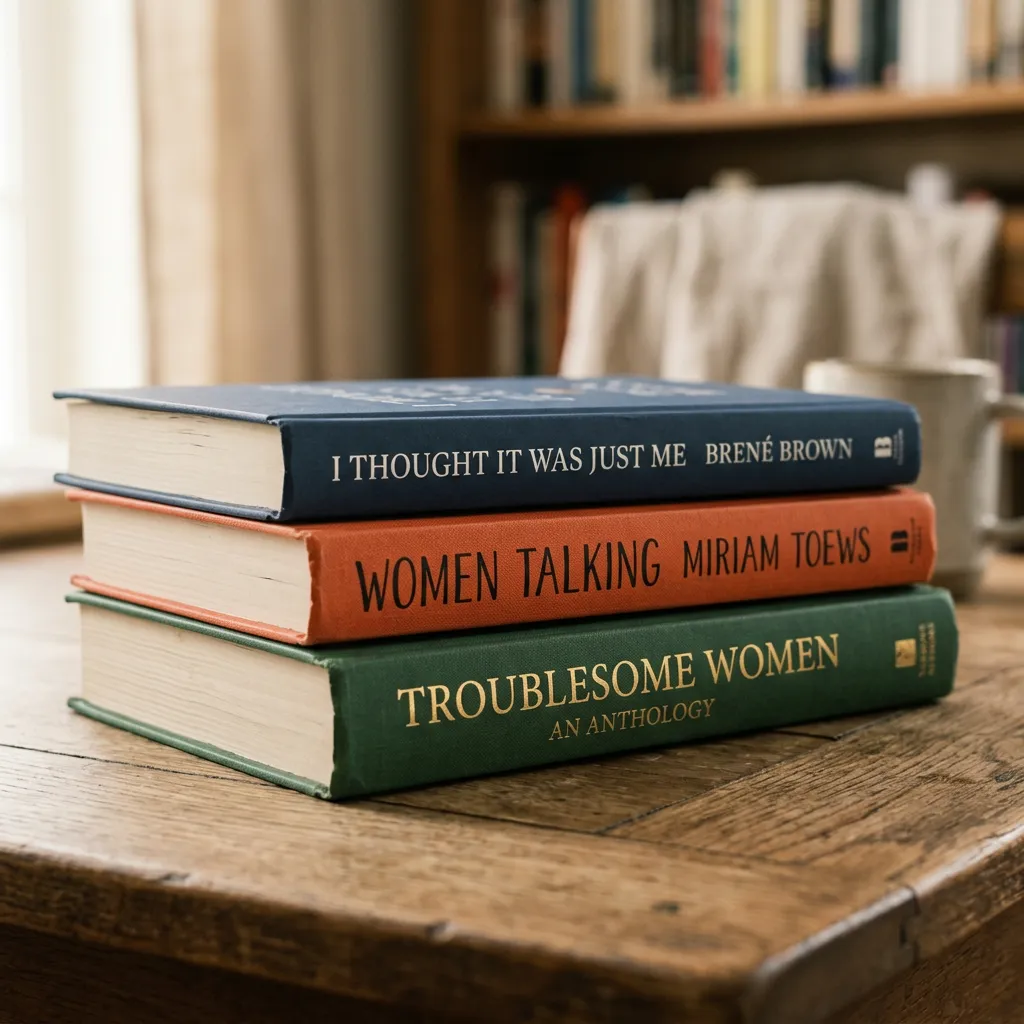
Welcome to the first post of The Uncaged L.A.B. blog. This is a place for thought-provoking and meaningful discussions seen through the lens of the books we read. For this first conversation, we’re exploring shame through three books:
"I Thought It Was Just Me (but it isn't)" by Brené Brown
"Women Talking" by Miriam Toews
Content note: “Women Talking” deals with sexual assault. I won’t go into detail here, but please take care if you choose to read it.
"The Book Club for Troublesome Women" by Marie Bostwick
Each one offers a different lens on shame and its impact on women. One is nonfiction by a shame researcher; one is a novel based on true events in which shame was used as a weapon of control; and the last is a novel about domestic conformity and how shame keeps women playing small.
I’ll give you the punchline first; one of the deepest roots of suffering, especially for women, is shame. The antidote is empathy. Shame can only survive where it goes unspoken. Think about the last time you had feelings of shame. Not guilt, but shame, where you truly felt like you were a bad person. What actions did you take to feel better about yourself? Perhaps you used healthy coping mechanisms such as meditating, journaling, and self-reflection. Perhaps they were less helpful, like doom-scrolling, alcohol or other substance use, or binge eating. I’ll wager that, no matter what you did in the moment, you didn’t truly move through the shame until you talked with someone and heard them say, “Yeah, me too.”
‘Shame vs. Guilt’
Let’s break this down further. First, what is the difference between shame and guilt? Brené Brown defines guilt as “I did something bad” and shame as “I am bad.” We are biologically wired for belonging, so believing we are bad, and might be cast out because of it, registers in the body as real pain. Research using brain imaging (Eisenberger et al., Science, 2003) found that social rejection activates brain regions that overlap with physical pain processing. It’s that critical to us as humans!
‘Why Shame Hits Women Differently’
Next, why do I say shame especially impacts women? It comes down to conditioning. Don’t get me wrong: men certainly feel shame, but it often shows up as anger, an outward emotion, whereas women tend to internalize it and believe they are at fault. When women internalize shame and secretly feel like they are a bad person, they aren’t able to show up in their families and communities as their true selves, thereby robbing the world of their unique talents.
‘What a Book Club Revealed’
This was certainly the case in “The Book Club for Troublesome Women.” Each woman in the book was meant for something more: a writer, a painter, a doctor, and a veterinarian. Their husbands ranged from complete jerks to genuinely supportive partners, yet each woman felt stuck until they started talking to other women. Under the guise of a book club, these women came together and started comparing experiences. Many of them voiced feelings I have felt myself. Feeling ungrateful when I have everything I’m supposed to want in life. Assuming every other high-achieving woman had it all figured out (the career, the marriage, the well-adjusted children), only to discover that they, too, had given up on their own desires and developed unhealthy coping mechanisms. Realizing that we as women have been asked to carry is more than any one person should have to carry.
‘The Power of Women Talking’
So what do we do? It starts with community. Female community. One of the starkest examples of what women talking can do is, fittingly, “Women Talking.” The novel is Miriam Toews’s response to real events in a Mennonite colony in Bolivia (2005 – 2009), where men in the community drugged and assaulted the women. The attacks were blamed on demons, or dismissed as the women’s imagination and punishment for their sins. Once the women started talking, they were able to see that they had nothing to be ashamed of and that the conditions around them, not who they were, made them believe they were bad women.
‘Finding Your People’
So, community. It can take effort to find your community, especially when your days are consumed not only by career and child-rearing but also by the invisible mental load. If you’re anything like I was when I started this journey, you’re so exhausted at the end of each day that there’s nothing left for female friendships. Since then, I have done the hard work of being intentional with my time, and now I have room for those friendships. I’ve also been incredibly fortunate to have moved into a community that has so many wonderful women who want to support each other and our children. That kind of community is exactly what I want to build with you here.
‘Let’s Talk’
In the vein of ‘Women Talking’, let’s talk.
1) What resonates for you?
2) Do you keep your shame to yourself or share the burden with others?
3) What does your community look like, and how did you build it?
Share your answers in the comments below and join our mailing list to continue the conversation.