Trust Can’t Be Rushed (But It Can Be Built on Purpose)
One of the main themes of the high-performing teams I’ve led is that we took the time to develop trust and psychological safety before we achieved great results. Many corporations and executives get this wrong, assuming that if they put a strong leader in place, results will quickly follow. Trust takes time to develop, and while we’ll talk about some methods for attaining trust, it cannot be rushed.
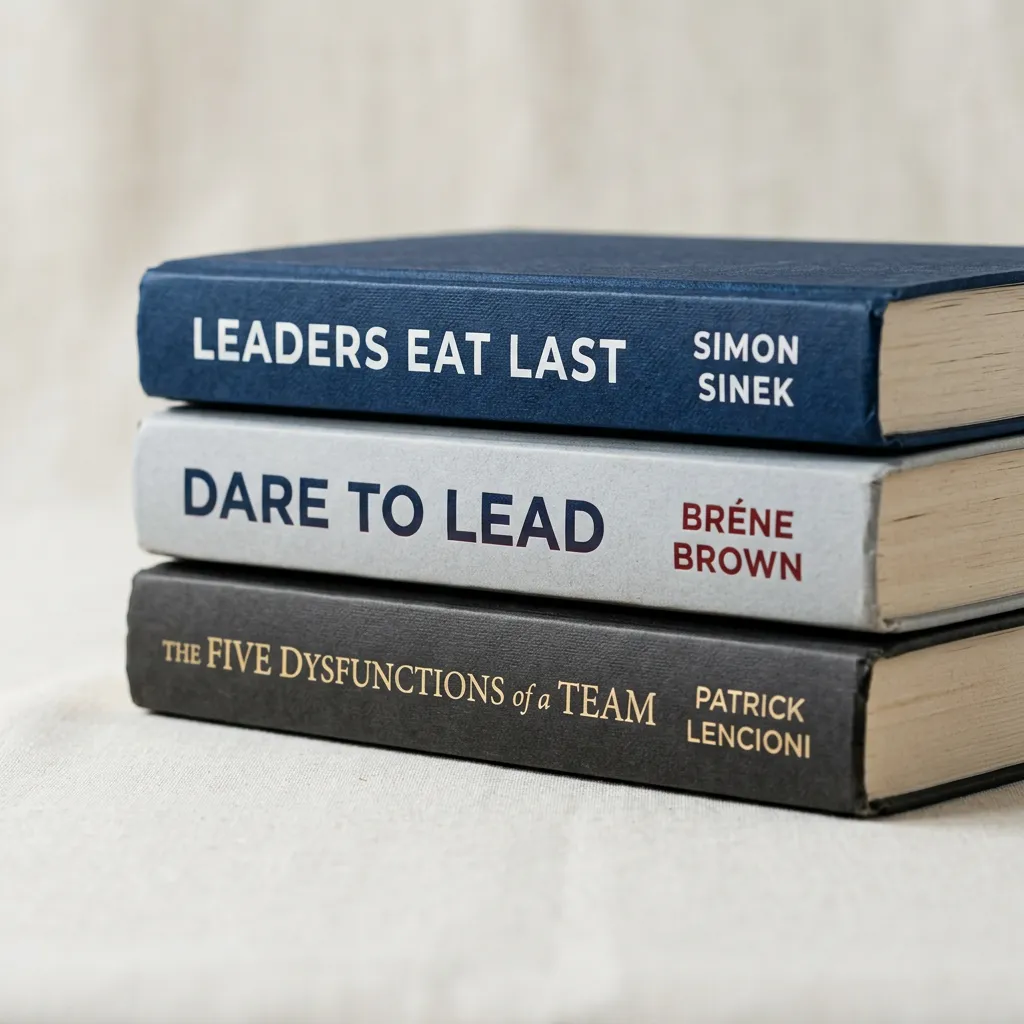
Three books that show why trust and safety are critical within teams:
· Leaders Eat Last by Simon Sinek
· Dare to Lead by Brené Brown
· The Five Dysfunctions of a Team by Patrick Lencioni
Each of these authors has written several books on leadership, and I encourage you to read any of them. In a future post, I’ll compare more of their works.
‘Leaders Eat Last’
I remember when I read Simon Sinek’s “Leaders Eat Last.” Ironically, it was while at a sales conference in Florida in March of 2020 where we stood in long, hot lines to fill our plates at the buffet tables. I took the opportunity to discuss some of the themes in the book with my colleagues in line while literally serving myself and eating last! In short, the book is about servant leadership and the idea that if you take care of your people, trust them to make the right decisions, and support them when they make mistakes, they will reciprocate by going above and beyond, not necessarily for the organization, but for the leader. Sinek talks about the importance of the leader showing up authentically and with intention. When a leader shows up with genuine concern for their employees and acts with consistency, their teams feel the support and bit by bit start to develop trust in their leader. Of course, by the end of that particular week, we were all talking about leading our teams remotely, not realizing it would be our last time face to face for years. Strong leadership became critical during COVID times!
‘Dare to Lead’
Brené Brown takes this further with her research on vulnerability. She argues that being vulnerable is a necessity for a good leader who wants to build trust and empower their team. This doesn’t mean oversharing personal details but rather being honest about uncertainty, mistakes, fears, and hopes. It’s essentially allowing yourself to be human with your team. When a leader allows their mistakes to be seen, kids and employees alike learn that it is safe to try their best even if it results in making a mistake. Perfection is not a requirement; in fact, it gets in the way of building trust. It reminds me of an anecdote which demonstrates well the Pratfall Effect, a classic finding in social psychology which describes how a highly competent person becomes more likeable when they make a small, relatable mistake. This example is about a person making smoothies in a mall. When she tried to engage people around the “right way” to make a smoothie, hardly anyone stopped. Yet, when she accidentally dropped the ingredients and started panicking, people came over to help. They saw themselves in her struggle and wanted to help. Human beings need to see each other’s humanity in order to trust them and feel safe.
‘The Five Dysfunctions of a Team’
Finally, Lencioni’s “The Five Dysfunctions of a Team” shows what can happen when trust is missing from a team. He writes the book as a fable, and I have to say it is quite entertaining and fun to read! Like Brown, he argues that trust must be built on vulnerability, not just competence. He goes further, saying trust must come first, before a team can engage in healthy conflict, commit to decisions, hold each other accountable, and deliver results. You’ll notice that the protagonist is a female CEO, and I do wonder about that choice. Did Lencioni choose a woman in order to challenge leadership stereotypes? Was it because he was better able to emphasize emotional intelligence through a woman’s point of view? Or perhaps he wanted a stark contrast with the team bringing her in as an outsider. I’ve found no evidence to support any of the hypothesis but it does make me think.
‘How to Build Trust Intentionally’
So, with trust being of critical importance to building teams that perform and deliver results, and shareholders wanting a return on their investment yesterday, how do we proceed? While you cannot shortcut trust building, you can be intentional about the approach. First, it always starts with awareness of self. How you show up as a leader, in your place of work or even your household, will determine how likely people are to follow you. Ask yourself: do you want them to follow you because they fear you, or because they respect you? Bruce D. Schneider’s Energy Leadership provides a good framework for intentionally choosing the energy you show up with at any given time. I found it so powerful that I built my coaching approach around this. Once you build self-awareness and are intentional about the level of energy you routinely show up with, get to know your people, not as employees, but as people. Where do they come from? What are their aspirations? How can you create a win-win relationship where you are helping each other achieve your goals? (This is referred to as Level 5 energy by Bruce!) Finally, you’ll want to create spaces where it’s safe to have the difficult conversations and voice opinions. With consistency, this approach will build what Sinek calls a Circle of Safety, and the team will start functioning as one organism.
‘When the Organization Wants Results Yesterday’
Of course, while you’re doing the work of building and aligning a high-performing team, you also have to face the reality of the results your organization is counting on. So, what do you do? Ideally, you’ll work for an organization that understands the need for psychological safety and that building trust takes time. It will be better accepted if you can put a timeline on it, such as a 30-60-90-day plan for building trust. If you find yourself working for an organization that does not set its teams up to build trust, you’ll find yourself in the position of warding off the wolves while keeping the bunnies safe. This can work too; just be mindful of the toll it will take on you and ensure you have good boundaries and self-care practices in place. In summary, building trust is not a step to skip. Without it, your team will never consistently achieve the results expected of it. In a future post, we’ll talk about how to align a team around a shared vision and create momentum toward a shared goal. For now, it starts with self-awareness and building trust through empathy and vulnerability.
‘Let’s Lead’
1)What would you add as important ways to build trust?
2)Have you ever shown up to the same situation with two different ‘energies’. What was the outcome of each?
3)How have you balanced the need for delivering results with the need to build trust?
Share your answers in the comments below and join our mailing list to continue the conversation.